Israel Votes in High-Stakes Election as Netanyahu Faces Challenge from Gadi Eisenkot
By Unzila Rasheed Sheikh
Israelis are voting today in a closely watched general election that could reshape the country’s political leadership and future direction. The election marks the first national vote since the Hamas-led attacks of October 7, 2023, in which approximately 1,200 people were killed and 251 were taken hostage.
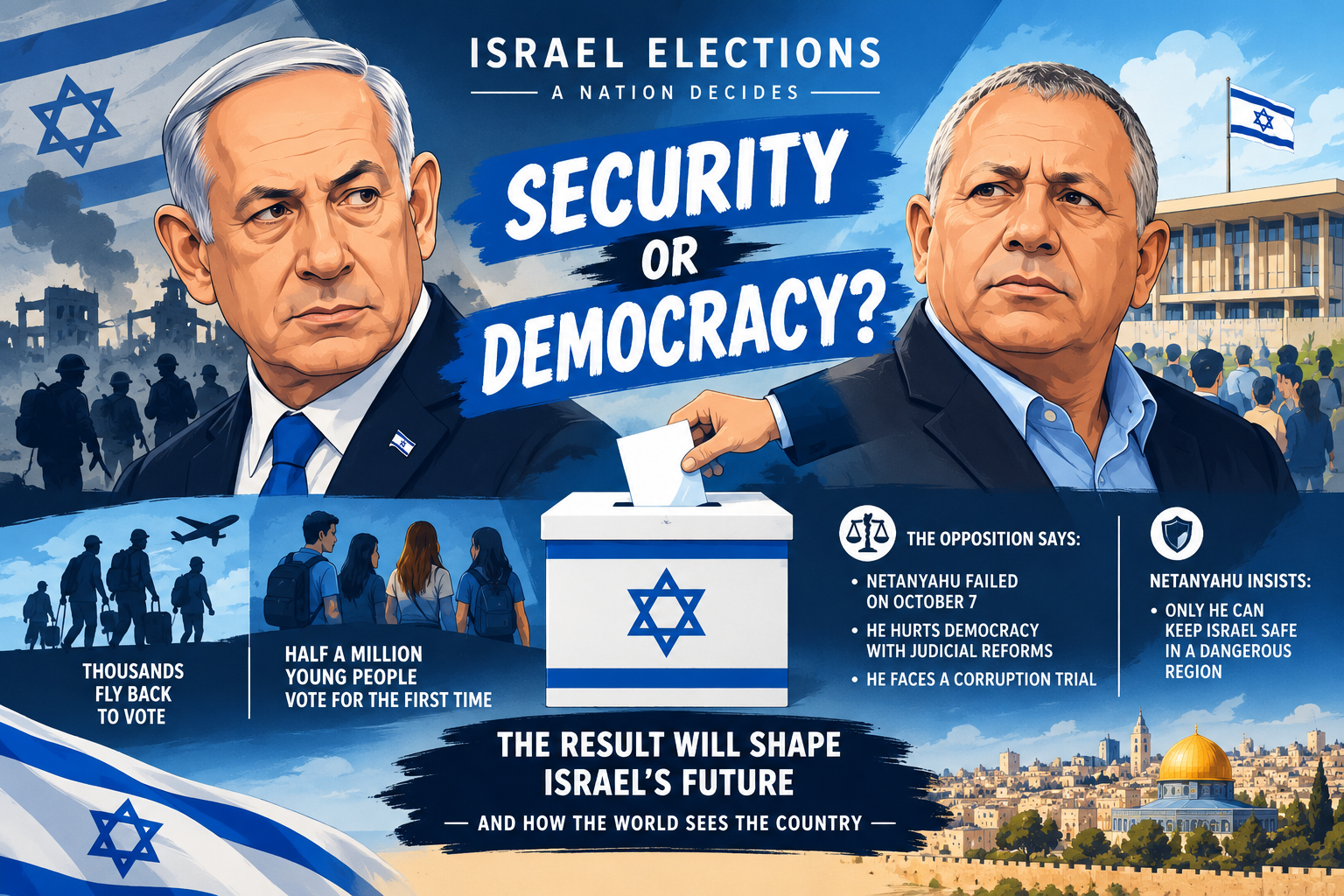
Prime Minister Benjamin Netanyahu faces a major challenge from former military chief Gadi Eisenkot, whose campaign has focused on accountability for the security failures surrounding the October 7 attacks, judicial independence and changes to the country’s political direction.
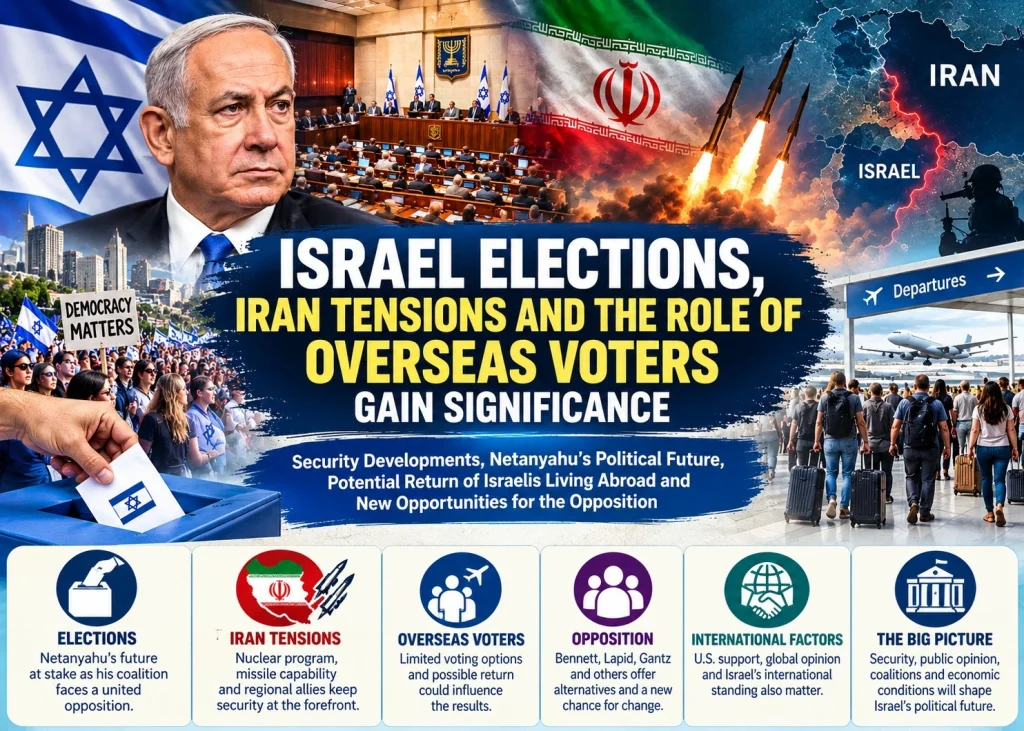
The contest has drawn widespread attention as voters consider questions of national security, democratic institutions, military service and Israel’s international standing. Reports indicate that tens of thousands of Israelis living abroad have returned to vote, while hundreds of thousands of eligible voters are participating in a national election shaped by years of conflict and political division.
Security, Accountability and Democracy at the Centre of the Campaign
The election has become a referendum on Netanyahu’s leadership and his government’s handling of the country’s security challenges.
Eisenkot and other opposition figures have criticised Netanyahu over the failures preceding the October 7 attacks. They have called for a state commission of inquiry to examine the decisions and circumstances that allowed the attacks to occur. Opposition leaders have also raised concerns about the government’s judicial reforms and their potential implications for democratic institutions.
Netanyahu, meanwhile, has emphasised his security record and argued that his leadership is necessary to protect Israel in a volatile regional environment. His supporters point to the government’s military actions and national security policies as central considerations for voters.
The competing arguments have placed security and democratic accountability at the heart of the election campaign.
A Country Divided Over Its Future
Israel’s political debate has been shaped by the consequences of the October 2023 attacks and the subsequent war in Gaza, alongside wider regional conflicts and growing international criticism.
For many voters, the election represents an opportunity to assess the government’s handling of the security crisis and its broader domestic policies. Others remain concerned about the risks of political change in a region facing continuing instability.
The contest also raises questions about the future of Israel’s judicial system, the role of the military, exemptions from compulsory military service for ultra-Orthodox men and relations with international partners.
Although Netanyahu and Eisenkot are central figures in the contest, the final outcome will also depend on the performance of smaller parties and their willingness to join governing coalitions.
Coalition Negotiations Could Shape the Outcome
Israel uses a proportional parliamentary electoral system in which parties compete for seats in the 120-member Knesset. A government needs the support of at least 61 members to command a parliamentary majority.
As a result, the election outcome will not necessarily be determined by which party receives the largest share of votes. Coalition negotiations among multiple parties could prove decisive, particularly if neither political camp secures a clear path to a majority.
The process of forming a government could therefore continue after voting ends, depending on the distribution of seats and the positions adopted by smaller parties.
An Election With Regional and International Consequences
The election is being closely watched beyond Israel because its outcome could influence the country’s domestic policies, regional diplomacy and relations with international partners.
The next government will face continuing questions about security, the future of the war in Gaza, relations with neighbouring countries and Israel’s international reputation. It will also confront domestic demands for accountability and decisions about the balance between executive authority and judicial independence.
As voting continues, Israelis are deciding which leadership and political direction they believe can best address the country’s security concerns and democratic challenges. The results, together with the coalition negotiations that follow, will help determine the next chapter of Israeli politics.